Choosing a Power Station for a Refrigerator: Startup, Cycling, and Runtime
Check your refrigerator's electrical needs, cycling energy use, backup settings, and recharge plan before relying on a portable power station.

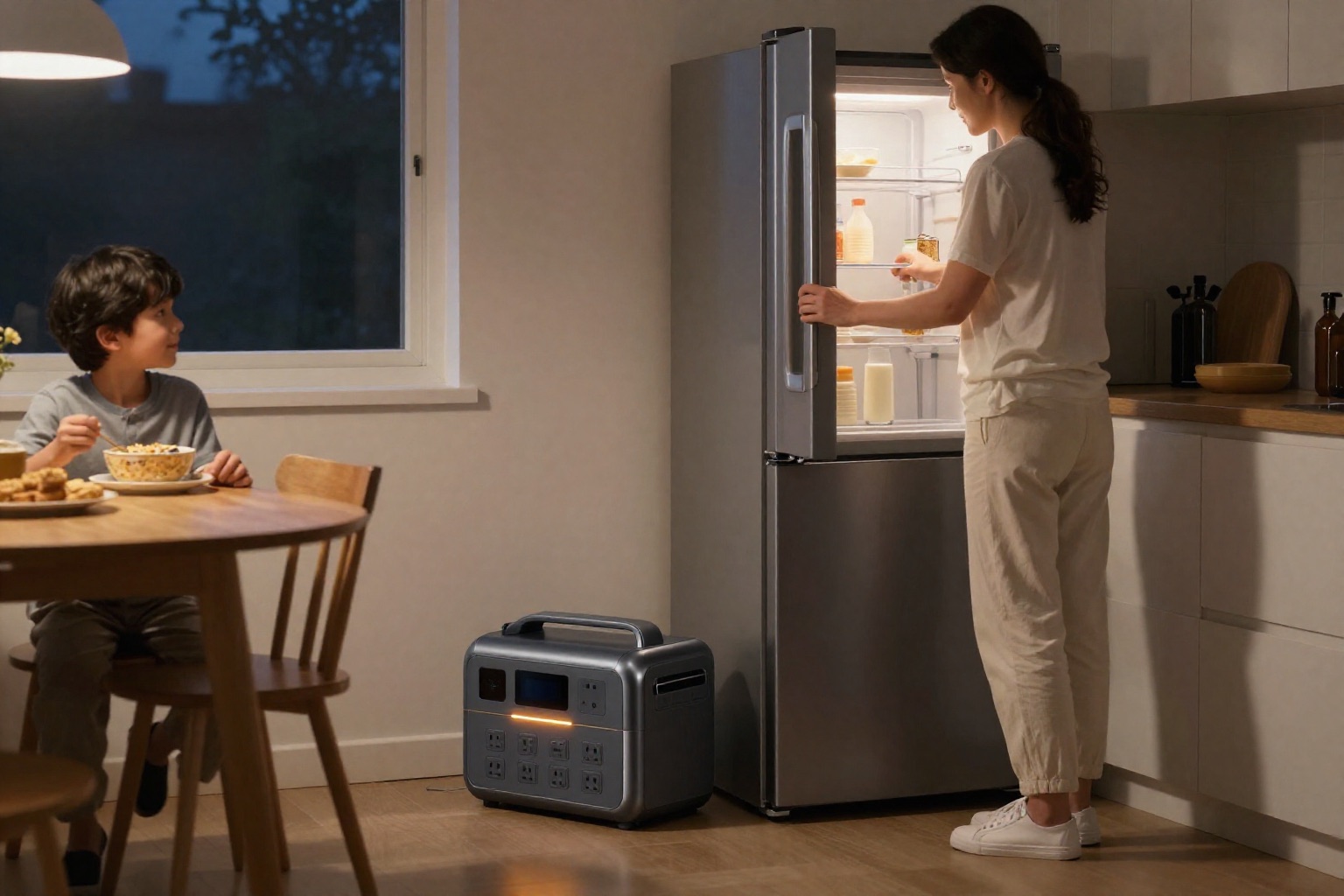
Keeping a fridge cold through an outage comes down to three checks. The station has to support that exact appliance, hold enough usable energy for the hours you plan to cover, and keep its output on through the fridge's quiet spells between compressor cycles. A generic fridge-wattage chart will not tell you that, and no runtime calculator is a food-safety guarantee.
Affiliate disclosureAs an Amazon Associate we earn from qualifying purchases made through links on this page. Commissions never change our ratings.
Identify the refrigerator before shopping
Short answer A refrigerator backup plan needs three checks: the station must support the exact appliance, hold enough usable energy for the planned interval and keep its output on through the refrigerator's quiet periods.
Find the refrigerator's model number and its manufacturer's electrical requirements. Record:
- Supply: voltage and frequency.
- Requirements: any stated running or starting requirements.
- Restrictions: limits on external power.
Then identify the precise power station and regional version. The name of a product family is not enough: EcoFlow's manuals, for example, distinguish country-specific AC specifications and individual output limits.[2]
If the appliance manufacturer does not provide the information needed to confirm the match, ask for it rather than inventing a surge allowance. A successful anecdote about another refrigerator is not evidence for yours. Our buying checklist is useful here because it puts compatibility ahead of nominal battery size.
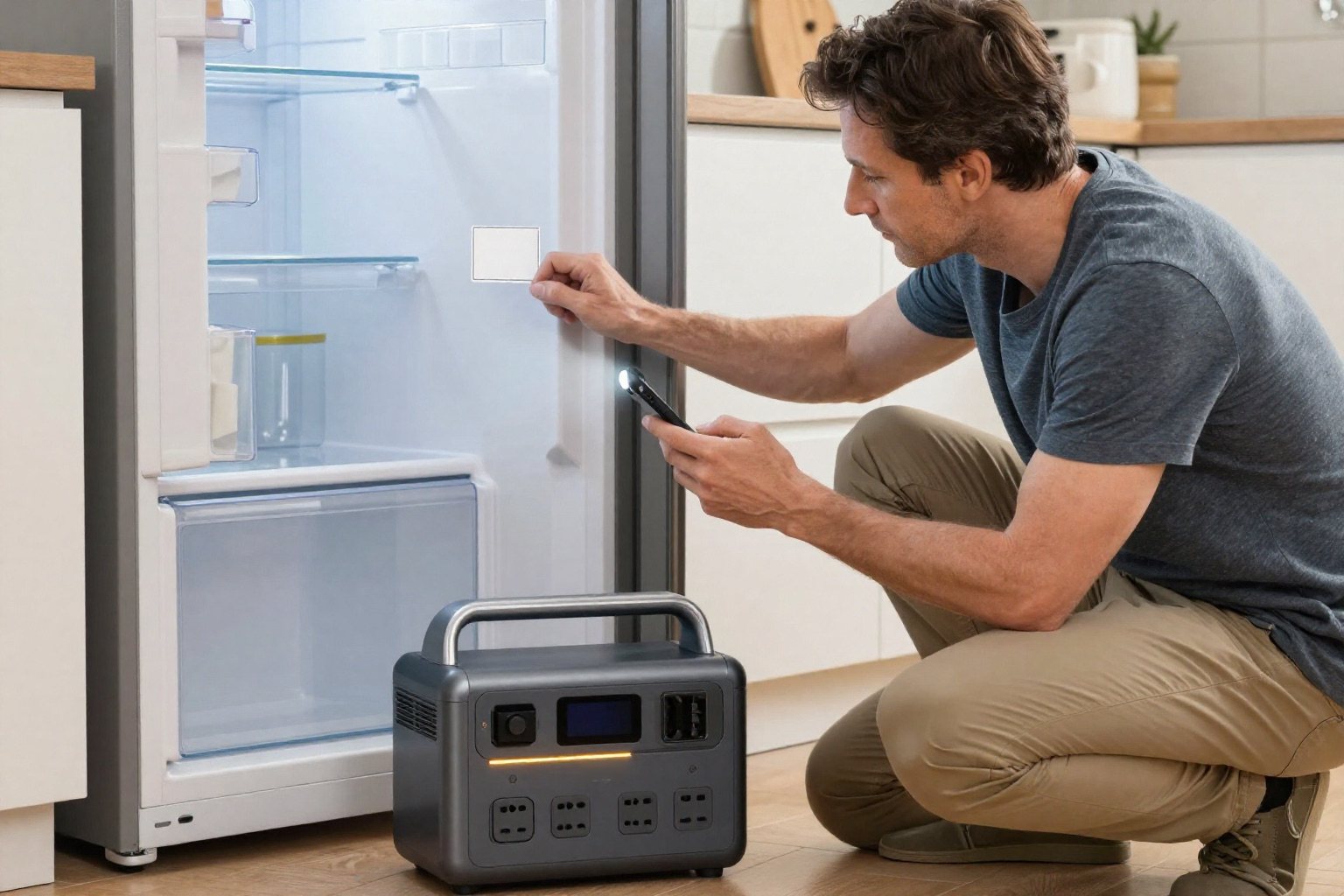
Separate startup from energy over time
Check documented starting requirements separately from energy use. A compressor's operating cycle is not a steady load, and a battery's stored Wh cannot by itself establish startup compatibility. EcoFlow explicitly treats refrigerators as intermittent loads and separately publishes AC rated and surge output for the DELTA 3 Classic. Neither entry is a universal refrigerator sizing rule.[2]
Do not assume a boost mode supplies an appliance's normal electrical conditions. The same manual says X-Boost does not support devices with voltage protection and notes that such devices may stop because of low voltage. Use the ordinary output specification and the appliance manufacturer's requirements as the starting point; obtain explicit confirmation before depending on a special mode.[2]
Estimate energy across the intended interval
Watts describe demand at a moment; watt-hours describe energy over time. That distinction matters when a refrigerator alternates between active and quiet periods. EIA's definition supports the arithmetic, but not a claim that a particular refrigerator will average a particular number of watts. Our energy and runtime guide explains the calculation and its assumptions.[1]
If using a plug-in energy monitor, choose one approved for the appliance and follow both sets of instructions. Record energy across a representative operating period, not just a quick glance at instantaneous power. Keep notes on household use and conditions during the observation. Treat a short trial as limited evidence; do not label it a worst-case measurement or extrapolate it into guaranteed outage coverage.
Turn that estimate into a cautious battery budget
For planning, divide assumed usable battery energy by estimated average refrigerator demand. If starting with rated capacity, state any usable-energy fraction as a hypothetical assumption. Do not quietly label an arbitrary percentage as inverter efficiency. Include other loads if the same station will charge phones or power lights, and decide what reserve you want to preserve.
The output check still comes first. Extra capacity does not resolve a mismatch between the appliance and the station's documented power characteristics. If the battery budget is insufficient, consider a supported recharge plan or a compatible expansion option. Our extra-battery guide explains why expansion is model-specific rather than an invitation to attach any battery.
Want the fridge and the rest of the kitchen covered? Our 2000 watt power station guide works through runtimes on a 2 kWh battery, start-up surge and the fridge figures the makers state.
Review AC timeout and transfer behavior
Some power stations can turn off their AC output after a low-load or idle period. EcoFlow specifically warns that an intermittent refrigerator load can trigger the DELTA 3 Classic's AC timeout and instructs users who need continuous output to set the timeout to never and check battery level regularly. This is a setting to verify on that model, not a universal menu path.[2]
If you expect automatic backup when utility power disappears, also check the exact transfer behavior and supported load. A transfer specification does not promise unlimited continuity for every appliance. Review our EPS versus UPS guide, then consult both manufacturers if compatibility is unclear. Manual transfer and automatic standby use should be treated as different plans, not blended into one confident runtime claim.
| Check | What to verify | Do not rely on |
|---|---|---|
| Startup | Documented starting needs vs rated and surge output | Stored Wh or a boost mode |
| Energy | Energy over a representative period | One instantaneous watt reading |
| Output continuity | AC timeout and transfer behavior | Default settings on an intermittent load |
Rehearse the plan without risking food
Before relying on the setup, follow the manufacturers' instructions for an ordinary, supervised trial with a safe fallback available. Observe whether the appliance operates normally, whether output stays enabled through quiet periods, and how the station reports remaining charge. Do not repeatedly force compressor restarts as an improvised stress test; follow the refrigerator's own restart guidance.
Keep a written record of what you observed and what remains unverified. A successful trial is evidence about that trial, not proof of every future temperature, operating state, or battery condition. Maintain a separate food-temperature and food-safety plan using appropriate official guidance. Electrical operation alone does not establish that food has remained safe.
Place the equipment and plan the next charge
Use a location allowed by the station's manual, with access to controls and required ventilation. EcoFlow warns against blocked heat dissipation, damaged cables, and wet operation; do not put the station in a sealed cabinet simply to hide it. If equipment has been exposed to floodwater, do not resume use merely because the outside looks dry.[2]
Finally, decide what happens when energy runs low. A battery is one component of the household response, not a reason to postpone relocation or other safety decisions. Use the outage preparation guide to document priorities and a fallback. This guide addresses ordinary household refrigeration only, not medical storage or life-sustaining equipment.
Our rated picks
The three best-rated models of our best portable power stations ranking, from the buyer review record and the listed specs.


Product images: Amazon listings
References
Manufacturer manuals and independent sources for facts stated in this guide, also linked where the guide states them.
- U.S. Energy Information Administration (EIA): Measuring electricity · watts measure power at a given moment, watt-hours the energy used over time
- EcoFlow DELTA 3 Classic user manual · manufacturer manual: outputs, X-Boost, AC timeout, solar input