Jackery Solar Panels: Which SolarSaga Fits Your Explorer
Which Jackery solar panel fits your Explorer: the five SolarSaga panels, DC8020 vs DC7909 plugs, the Explorer 300 catch and the kits worth buying.

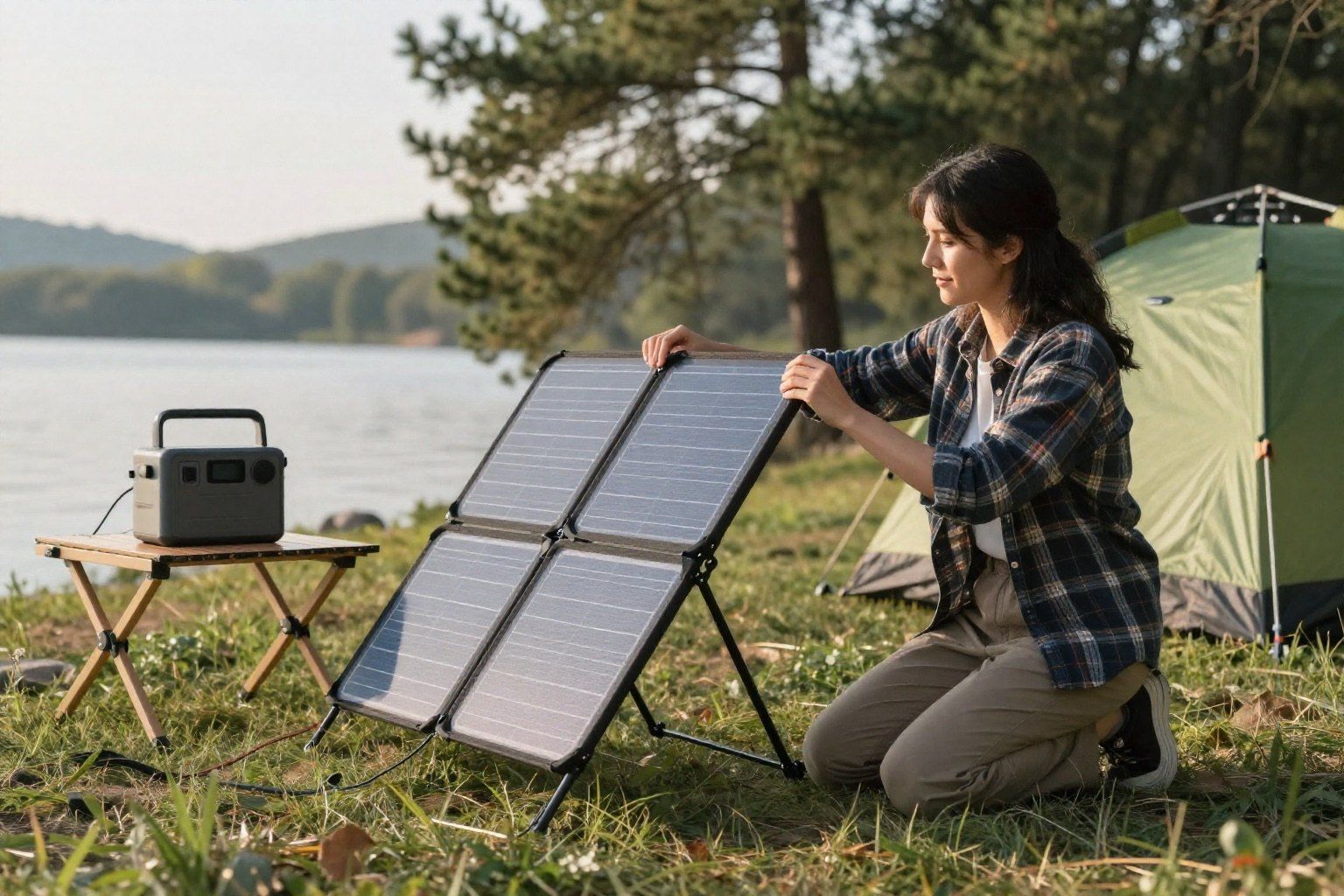
Jackery sells its Explorer stations and its SolarSaga panels as one family, and most of the time that's a good thing: pick the right panel for the right Explorer and solar charging comes down to unfold, plug in, done. The catch is that the family has grown. Our catalogue holds five SolarSaga panels, the listings mention three different solar plugs, and the most tempting 100 W panel throws an error on one of the small stations. Get the plug and the solar input right, and the rest is easy.
Affiliate disclosureAs an Amazon Associate we earn from qualifying purchases made through links on this page. Commissions never change our ratings.
The five SolarSaga panels, side by side
Jackery's panel line splits in two: folding panels you carry to the sun, and rigid or flexible ones you fix somewhere and forget. Here is what each listing says, plugs included.
| Panel | Build | Connection notes in the listing |
|---|---|---|
| SolarSaga 100W Air | Folding, 7 lb, bifacial PERC cells at 23%, built-in stand and sun indicator | Two USB ports; not compatible with the Explorer 300 / 300 v2 series |
| SolarSaga 100W Light | Flexible, 4.52 lb, bends up to 221°, IBC cells at 25% | 3 m flat cable included |
| SolarSaga 100 Prime | Rigid, 12 mounting holes, Z bracket kit, bifacial at 25% | Anderson to DC8020 adaptor in the box; older Explorers also need a DC8020 to DC7909 adapter |
| SolarSaga 200W | Folding, bifacial IBC cells, up to 26.7% | 9.8 ft cable with DC8020/DC7909 ends, plus USB-A and USB-C |
| SolarSaga 500X | Five independent 85 W panels, series or parallel, bifacial at 25% | Named for the Explorer 2000 Plus, 3000 Pro and 5000 Plus |
All five listings state an IP68 rating (IEC 60529), so dust and rain are not the problem; fit is. If you only read one row, read the Air's: it's the panel most people reach for with a small station, and it's the one that won't work with the Explorer 300.
Start with the plug on your station
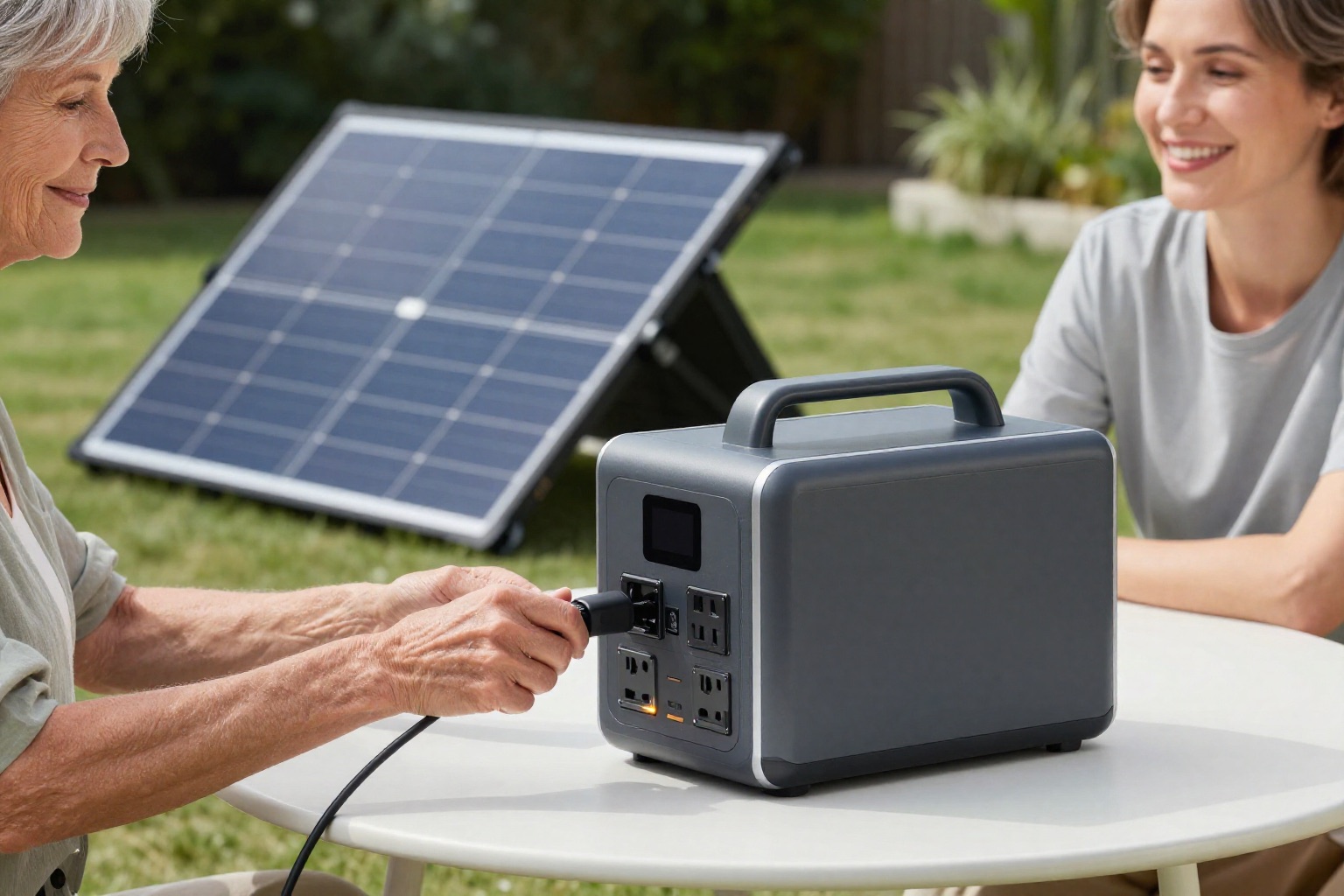
Before you compare watts, turn your Explorer around and look at the solar input. Jackery's listings mention three plugs: DC7909 on the older stations, DC8020 on the current ones, and Anderson, which turns up on the 100 Prime's own lead and in the 500X's box.
The listings leave clear clues. The SolarSaga 200W ships with a 9.8 ft cable carrying both a DC8020 and a DC7909 end. The Explorer 2000 v2 kit tells you to take the L-shaped DC7909 plug off that cable and use the straight DC8020 one. The 100 Prime comes with an Anderson to DC8020 adaptor, and its listing adds that older models (the E1000, E550, E500, E300, E240 and E160) need a DC8020 to DC7909 adapter on top. Roughly, then: a v2 station takes DC8020, one of those older models takes DC7909, and the adapter chain follows from there.
One more line is worth knowing before you shop around for a cheaper third-party panel. The listing for the Explorer 1000 v2 says it is compatible only with Jackery solar panels for solar charging. We'd take Jackery at its word on that one. For other stations, our MC4 to XT60 guide explains what the adapter side involves, and the solar panel compatibility checklist covers the voltage and current checks that no plug can skip.
Explorer 300 and the other small stations
The Explorer 300 is where most mix-ups happen, because it's small enough for a 100 W panel and the obvious 100 W panel is the wrong one. Its listing says it reaches 80% in about 2.8 hours with a 100W solar panel, or in 7.5 hours with a 40 W one. The 100W Air listing, for its part, says plainly that it is not compatible with the Explorer 300 / 300 v2 series and may trigger an input voltage error (an F7 code). Read those two listings side by side and the trap is plain to see.
The easy way out is the Explorer 300 kit with the 40W panel: the 40W Air panel comes in the box and the fit question is settled for you. If you want the quicker 100 W charge Jackery quotes, check Jackery's own compatibility chart for which 100 W panel it means, and leave the Air on the shelf. The station itself is a likeable little box, by the way: 292 Wh, 300 W of output with a 600 W peak, a 100 W USB-C PD port and 7.5 lb.
The original Explorer 240 is on the list of older models that, according to the 100 Prime listing, need a DC8020 to DC7909 adapter with that panel. If you're pairing one of those older units with a 100 Prime, add the adapter to the order.
Explorer 1000 v2: the sweet spot
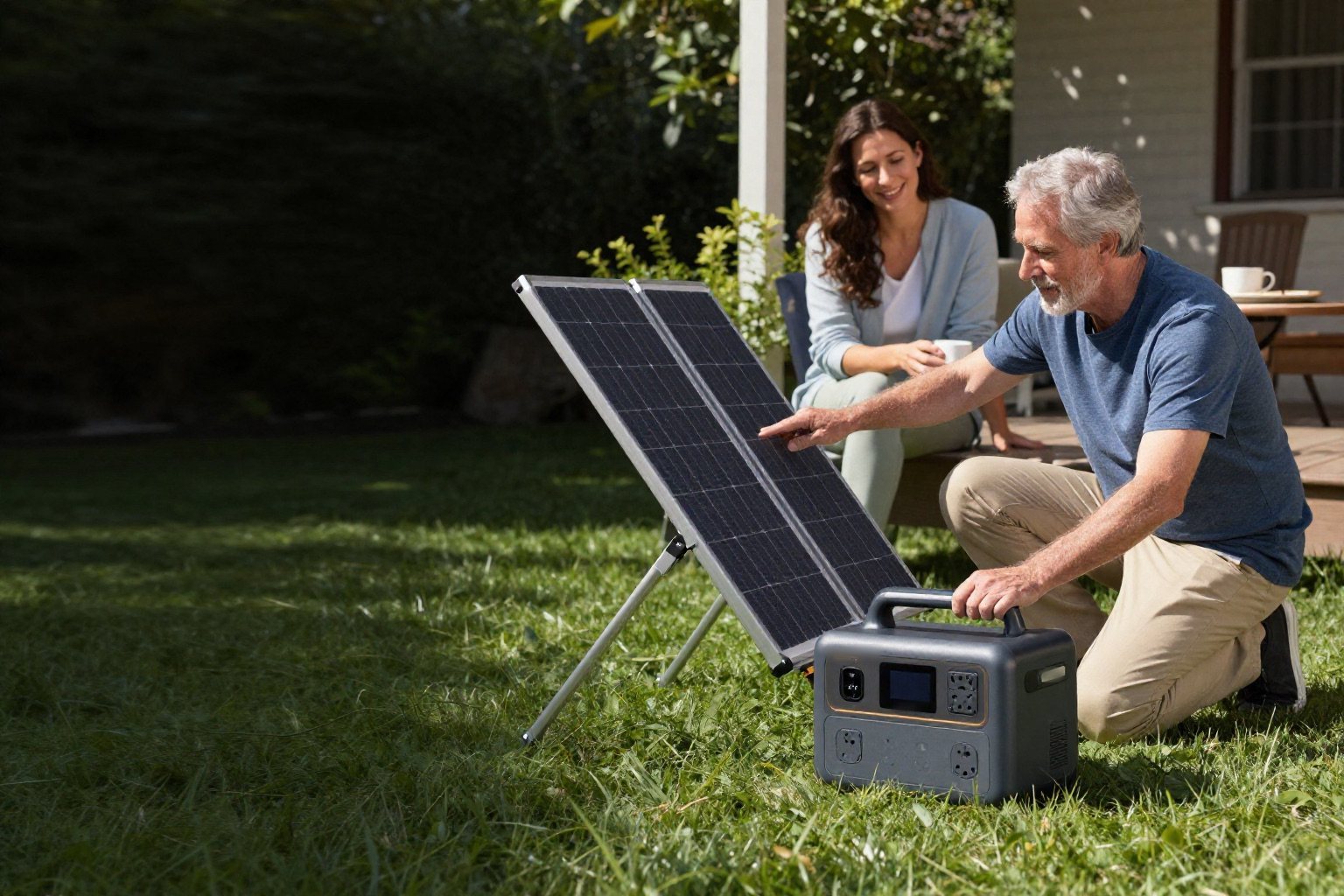
This is the station most people asking about a Jackery with a solar panel end up with, and it's easy to see why. The Explorer 1000 v2 states 1,070 Wh, 1,500 W of continuous output and up to 400 W of solar input, at 10.8 kg (23.8 lb in the listing). And since its listing says Jackery panels only, you're choosing between SolarSaga models anyway.
A single SolarSaga 200W uses at most half of that 400 W input. On paper, 1,070 Wh at a perfect 200 W takes a little over five hours; real sun delivers less than the label, so think of it as a good day of topping up rather than a quick refill. A 100 W panel halves that pace again. For camping weekends, 200 W is where we would start.
If you don't own the station yet, the kit is the smarter buy. The Explorer 1000 v2 with the 200W panel is rated 9.3/10 from 3,612 buyer reviews averaging 4.7/5, and it's #1 in our solar generator kit ranking. There's also a version with a 100 W panel, rated 7.4/10; its listing warns that the station and the panel ship separately, so don't worry if one box turns up first.
Explorer 2000 v2 and the big Plus and Pro units
The Explorer 2000 v2 doubles the battery to 2,042 Wh with 2,200 W of output, but keeps the same 400 W solar input. Jackery says it solar charges in as few as 6 hours with 400 W of panels, which is exactly what the 2000 v2 kit with two 200 W panels puts in the box. That kit is rated 7.6/10; the station on its own 8.7/10 from 869 buyer reviews.
Above that, the panels change. The SolarSaga 200W listing names the Explorer 1000 Plus, 2000 Pro, 2000 Plus and 3000 Pro, and claims that six of them fill a 2,042 Wh Explorer 2000 Plus in 2.5 hours. The SolarSaga 500X is built for that end of the range: five 85 W panels you can wire in series or parallel for 500 W, aimed at the Explorer 2000 Plus, 3000 Pro and 5000 Plus, with hinges and ground stakes in the box. And if you're growing a 2000 Plus with the Battery Pack 2000 Plus, its listing says the pack charges fully in 2 hours from six SolarSaga 200W panels on its own.
Six folding panels is a lot of grass to cover every morning. For a home setup that stays put, the 500X with its hinges and stakes makes more sense.
Which SolarSaga for which kind of trip
Once the plug and the station are sorted, the choice is mostly about how you'll use the panel.
- Hiking, car camping, a small station: the 100W Air. It folds smaller than an A2 sheet, has a sun indicator for aiming and charges the phones over USB. Just not with an Explorer 300.
- A van roof or a curved surface: the 100W Light. It follows the curve of the roof, and once it's fixed you stop thinking about it.
- A permanent setup on a van, a boat or a cabin: the 100 Prime, the rigid one built for brackets. Jackery says it still delivers 80% output after ten years.
- An Explorer 1000 v2 or 2000 v2 at the campsite: the SolarSaga 200W, the most efficient of the folding panels on paper.
- Home backup with a 2000 Plus or bigger: the 500X.
On our scores the 200W leads the panels at 7.6/10, the Air follows at 7.5, the 500X and the 100 Prime sit at 7.3 and the Light at 7.2. That's close enough that fit should decide, not the decimal point.
Panel only, or a kit?
If you don't own an Explorer yet, buy a kit. You get a station and a panel that are meant for each other, one order, and the right cable in the box. The Explorer 1000 v2 with the 200W panel is the one we'd point most people to: the best-rated kit in our ranking, a battery that covers a lot of evenings, and a panel that fills it in a sunny day.
If you already have a station, buy the panel that matches its plug and its input, and stop there. One good 200 W panel on a 400 W input is a perfectly sane setup, and you can think about a second one later if your manual allows it.
For the wider picture, our solar generator kit ranking compares the best-rated bundles from every brand, the solar panel collection lists every panel we rate, and the runtime calculator tells you how long the battery lasts once the sun goes down. Every Jackery we review is on our Jackery page.
Our rated picks
The three best-rated models of our solar generator kits ranking, from the buyer review record and the listed specs.


Product images: Amazon listings
Frequently asked questions
Which Jackery solar panel works with my Explorer?
Start with the solar plug on your station. The v2 stations in our catalogue use DC8020 (the Explorer 2000 v2 kit says to use the straight DC8020 plug), while older models such as the E1000, E500 or E240 take DC7909. The SolarSaga 200W ships with a cable carrying both ends. Then check the solar input: 400 W on the Explorer 1000 v2 and 2000 v2, and panel watts above that simply go unused.
What solar panel goes with the Jackery Explorer 1000 v2?
A Jackery one: its listing says the Explorer 1000 v2 is compatible only with Jackery solar panels for solar charging. The solar input tops out at 400 W, so one SolarSaga 200W uses half of it. The easiest buy is the Explorer 1000 v2 kit with the 200W panel, rated 9.3/10 and #1 in our solar generator kit ranking.
Does the SolarSaga 100W Air work with the Explorer 300?
No. The 100W Air listing says it is not compatible with the Explorer 300 / 300 v2 series and may trigger an F7 input voltage error. The Explorer 300 kit comes with a 40 W panel instead, and the station listing quotes 80% in about 2.8 hours with a 100 W panel.
Can I use a non-Jackery solar panel with a Jackery?
For the Explorer 1000 v2, Jackery says no: its listing states it is compatible only with Jackery solar panels for solar charging. For other models, read the solar section of your exact manual before buying any adapter. Our MC4 to XT60 guide explains what the plug side involves.
What adapter does a Jackery Explorer 240 need for a solar panel?
The original Explorer 240 is one of the older models that, per the SolarSaga 100 Prime listing, need a DC8020 to DC7909 adapter with that panel. The SolarSaga 200W cable already has a DC7909 end. Check the plug on your own unit first.
How long does a Jackery take to charge from solar?
The listings give a few numbers: the Explorer 2000 v2 in as few as 6 hours with 400 W of panels, the Explorer 300 to 80% in about 2.8 hours with a 100 W panel or 7.5 hours with the 40 W one. Those are good-sun figures; clouds, heat and the panel angle all slow things down. Our watts vs. watt-hours guide shows how to estimate your own.
References
Independent sources for facts stated in this guide, also linked where the guide states them.
- IEC 60529, degrees of protection provided by enclosures (IP Code), Bureau of Indian Standards edition · the IP code behind IP65, IP67 and IP68: 6 = dust-tight, then water jets (5, 6) or immersion (7, 8)
Products mentioned
- Jackery Explorer 1000 v2: solar input and panel compatibility (exact listing)
- Jackery SolarSaga 100W Air: Explorer 300 compatibility notice (exact listing)
- Jackery SolarSaga 100 Prime: adapters for older Explorer models (exact listing)
- Jackery SolarSaga 200W: cable ends and matching stations (exact listing)
- Jackery SolarSaga 500X: matching stations and box contents (exact listing)
- Jackery Explorer 2000 v2 + 2x200W panels: DC8020 connection note (exact listing)
- Jackery Explorer 300: solar charging times (exact listing)